Secure by Design. Through Contained Cryptographic Failure.
QuStream develops post-quantum and AI-resilient cryptographic systems for defence and critical infrastructure. Our Post-Quantum Ratchet (PQR) is designed to limit the damage from captured devices, exposed keys and vulnerable algorithms. It operates in hardware or firmware with tightly coupled proprietary QuStream software.
A captured device may give an attacker access to its current key and some of its messages. The aim is to keep that exposure within a defined boundary.
Contained Cryptographic Failure (CCF) is the design principle behind PQR. It establishes boundaries for the messages and security domains affected by a breach, and a recovery path when fresh, uncompromised secret material becomes available.
01 / INCIDENTDevice captured
An adversary extracts the device's current cryptographic state.
02 / EXPOSURESome messages at risk
Communications protected by the compromised state may become readable.
03 / CONTAINMENTExposure is contained
Securely erased earlier keys and independently protected systems can remain outside the breach.
04 / RECOVERYProtection can recover
New, uncompromised secret material can restore confidentiality for subsequent messages.
CCF also addresses the failure of multiple algorithms. PQR aims to keep the effects of those failures within the compromised security domains, provided independent protections and secrets remain secure.
The containment boundary depends on the threat model, key independence, secure erasure and correct implementation. Recovery after state compromise requires fresh secret material beyond the attacker's reach. Ratcheting alone cannot guarantee recovery.
The next cryptographic crisis
Already Harvested. Decrypt Now.
Post-quantum algorithms depend on security assumptions that may change. If new cryptanalysis reveals secrets protecting recorded traffic, previously intercepted communications could become readable immediately. Replacing the algorithm would not restore the confidentiality of data already exposed.
The exposure in recorded traffic
Changing algorithms can protect future sessions. PQR is designed to limit the exposure of earlier messages through evolving keys and separate security domains. Following a compromise, recovery relies on fresh secret material that an attacker cannot derive.
The accompanying review covers selected AI-relevant cryptanalytic findings from 2024 to 2026. These findings do not establish that any deployed PQC standard has been broken.
The Post-Quantum Ratchet (PQR) is QuStream's core cryptographic algorithm. It evolves cryptographic state over time to reduce reliance on long-lived keys and limit the reach of a compromise within a defined threat model.
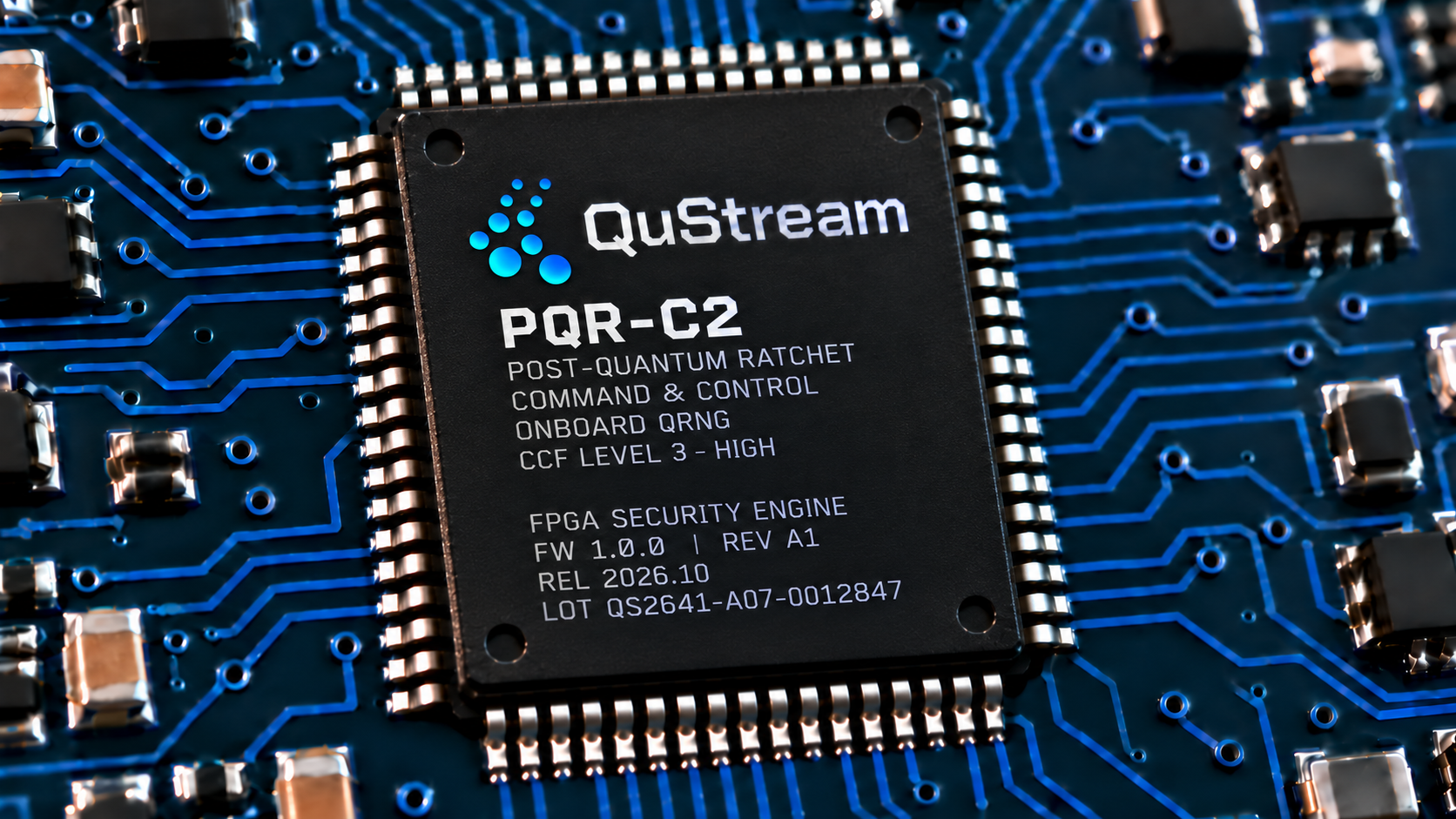
PQR is the underlying algorithm. It is implemented in hardware or firmware and requires tightly coupled proprietary QuStream software. PQR-C2, PQR-DR and PQR-ES are operational protocols built on that foundation; PQR-ES also integrates QuStream’s remote QRNG-backed entropy service.
PQR-C2 is designed to protect the confidentiality, integrity and authenticity of military command, control and telemetry messages, including in deployments where disruption or equipment capture is a credible risk.
Applications: unmanned platforms · mobile command posts · tactical networks
Operational protocol / 02
PQR-DR Data Resilience
PQR-DR is designed to protect mission data across changing networks and platforms. Its focus is limiting the exposure caused by compromised keys or cryptographic state over long operating lifetimes.
Applications: ISR data · satellite communications · critical infrastructure
Operational protocol / 03
PQR-ES Edge Security · IoT entropy service
PQR-ES brings the Post-Quantum Ratchet, closely integrated QuStream device software and a QRNG-backed entropy delivery service together for constrained IoT equipment. It is designed for compatible existing devices to gain stronger key-state diversity through a firmware upgrade rather than a hardware replacement.
These publications and technical materials cover the development of PQR, including the FTC Munich 2025 conference publication, the algorithm design and subsequent operational work.
Independent evaluation and certification pathways.
QuStream is preparing technical documentation and test evidence with European, NATO, US and international assessment requirements in mind.
Define the module
Set the cryptographic boundary, interfaces, approved functions and intended operating environment.
Build the evidence
Develop the security policy, lifecycle material, roles, self-tests and sensitive-parameter management evidence.
Map the evidence
Align implementation and documentation with the applicable assessment and testing requirements.
Independent assessment
Progress through the appropriate laboratory, certification or product-approval route for the defined scope.
European Union
EUCC / Common Criteria
European ICT-product assurance based on Common Criteria: ISO/IEC 15408 and ISO/IEC 18045.
NATO
NIAPC / Common Criteria
NATO product-assurance and approval route using Common Criteria protection profiles, with approved cryptographic products listed in NIAPC.
United States / Canada
FIPS 140-3 / CMVP
Cryptographic-module validation through the joint U.S.–Canadian CMVP programme for the defined module scope.
International
ISO/IEC 19790 + 24759
Cryptographic-module security requirements and associated test methods used internationally.
Validation scope, security level and delivery timing are subject to independent assessment and programme requirements.
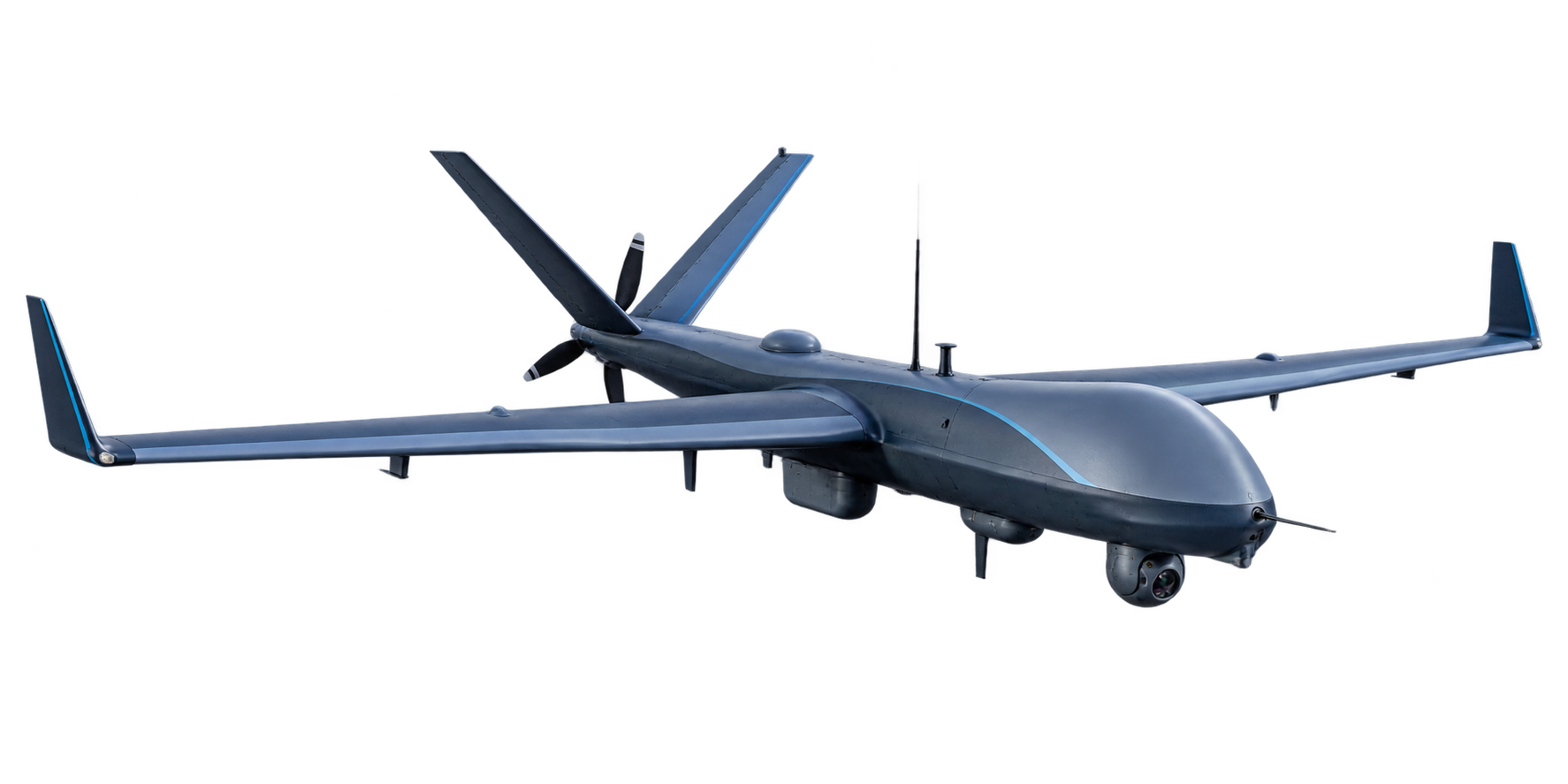
Unmanned platforms
Secure command and telemetry for unmanned platforms.
QuStream's integrated implementation is intended for airborne platforms with tight processing, power and bandwidth limits. Command and telemetry protection can be tailored to the aircraft and its operating conditions.
PQR-ES Edge Security / IoT
Billions of devices. One fragile source of trust.
AI does not need to break an encryption algorithm if it can predict the keys. Low-cost connected devices can suffer from weak start-up entropy, repeated seeds or long-lived cryptographic state. Across vast fleets, AI-assisted analysis could make finding and exploiting those weaknesses faster, cheaper and easier to automate.
And the obvious remedy—adding dedicated quantum-randomness hardware to every endpoint—is often unrealistic for battery-powered, price-sensitive equipment already deployed for years.
The answer is not another chip in every sensor. It is bringing trusted entropy to the edge as a service.
Estimated worldwide by the end of 2025. The scale makes shared weaknesses attractive to automated attackers.
4,000+
Distributed QuStream node network
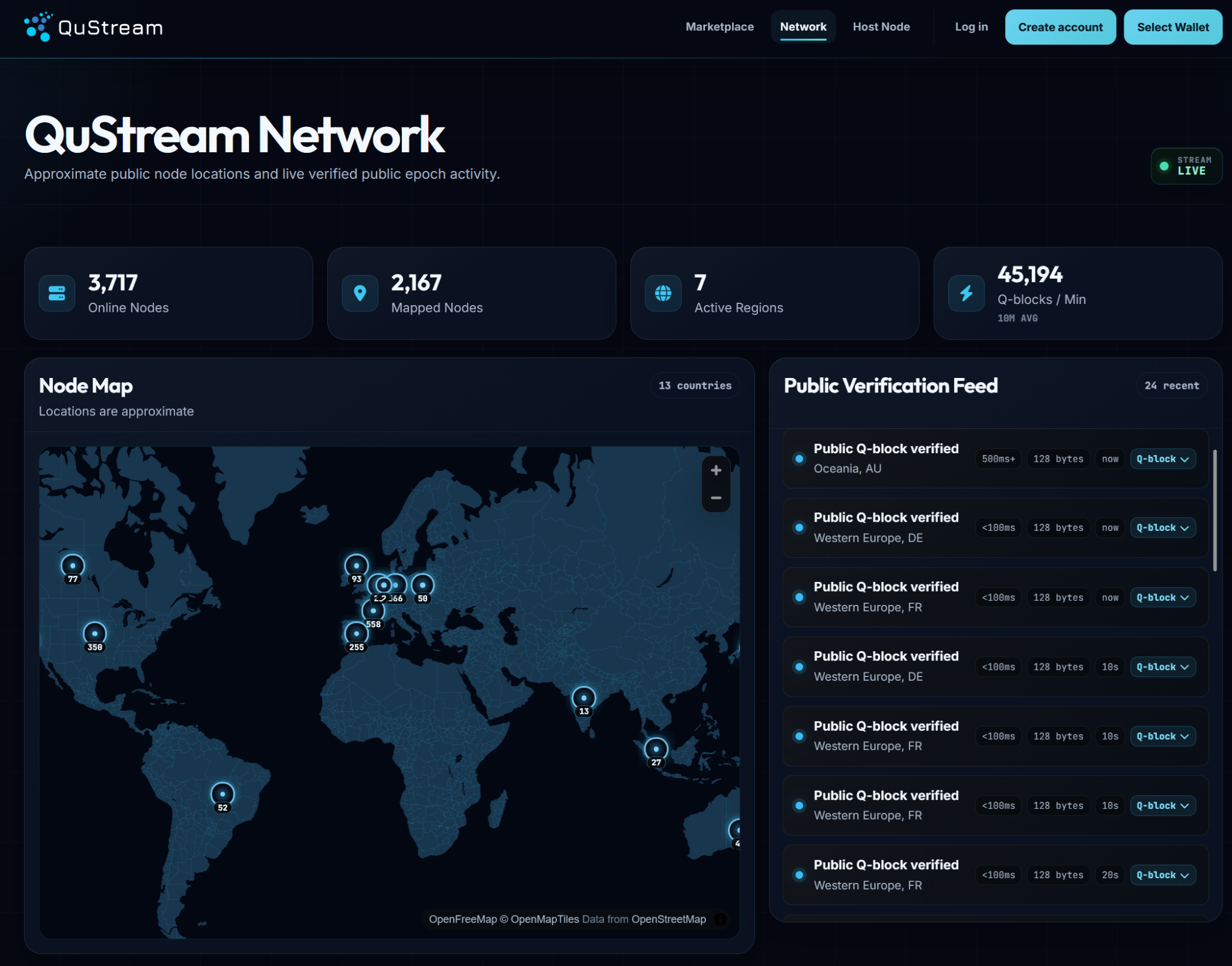
QuStream's service concept describes 4,000+ distributed nodes. The dashboard snapshot below shows 3,717 online at capture.
No new silicon*
For compatible installed devices
Compact PQR firmware and QuStream software can offer an upgrade route without replacing endpoint hardware.
QuStream Network / Distributed infrastructure
The network is already operating.
The QuStream Network dashboard shows thousands of online nodes, mapped locations and a public Q-block verification feed. PQR-ES is designed to extend this distributed infrastructure with protected entropy delivery to compatible IoT fleets, alongside lightweight PQR firmware and QuStream software.
QuStream Network dashboard · October 2026 snapshot · 3,717 online nodes · 2,167 mapped nodes · 7 active regions · 45,194 Q-blocks/min. These are point-in-time figures, not live website counters.
Public node verification and the protected delivery of entropy to individual devices are distinct services. Deployment of PQR-ES requires device provisioning, a trusted bootstrap, authenticated/confidential delivery, and integration with the manufacturer's existing firmware-update process.
Why this is an industry-scale security gap
A mathematically strong cipher still fails with a predictable key.
Randomness is not a cosmetic feature of cryptography. It underpins key generation, nonces and cryptographic state. When entropy quality is poor at boot, devices can generate repeated or guessable values. Previous research has exposed weak keys in deployed network equipment; today's fleet-scale automated analysis increases the pressure to find the next class of mistakes.
01 / THE COLD START
A weak first random seed
Some embedded devices have few usable entropy sources at boot, creating opportunities for predictable keys or repeated initial states if their random-number generation is poorly engineered.
02 / THE AI ADVANTAGE
From one weakness to a fleet
AI-assisted analysis can help automate fingerprinting, cluster repeated behavior and prioritize vulnerable populations. An attacker may target implementation patterns rather than breaking post-quantum mathematics.
03 / THE HARDWARE TRAP
Security versus cost and battery life
Adding a dedicated QRNG, board space and associated power draw to every low-cost endpoint is often uneconomic—particularly when the hardware is sealed, deployed or expected to run for a decade.
The PQR-ES security stack
Cryptographic hardware. Device software. Entropy as a service.
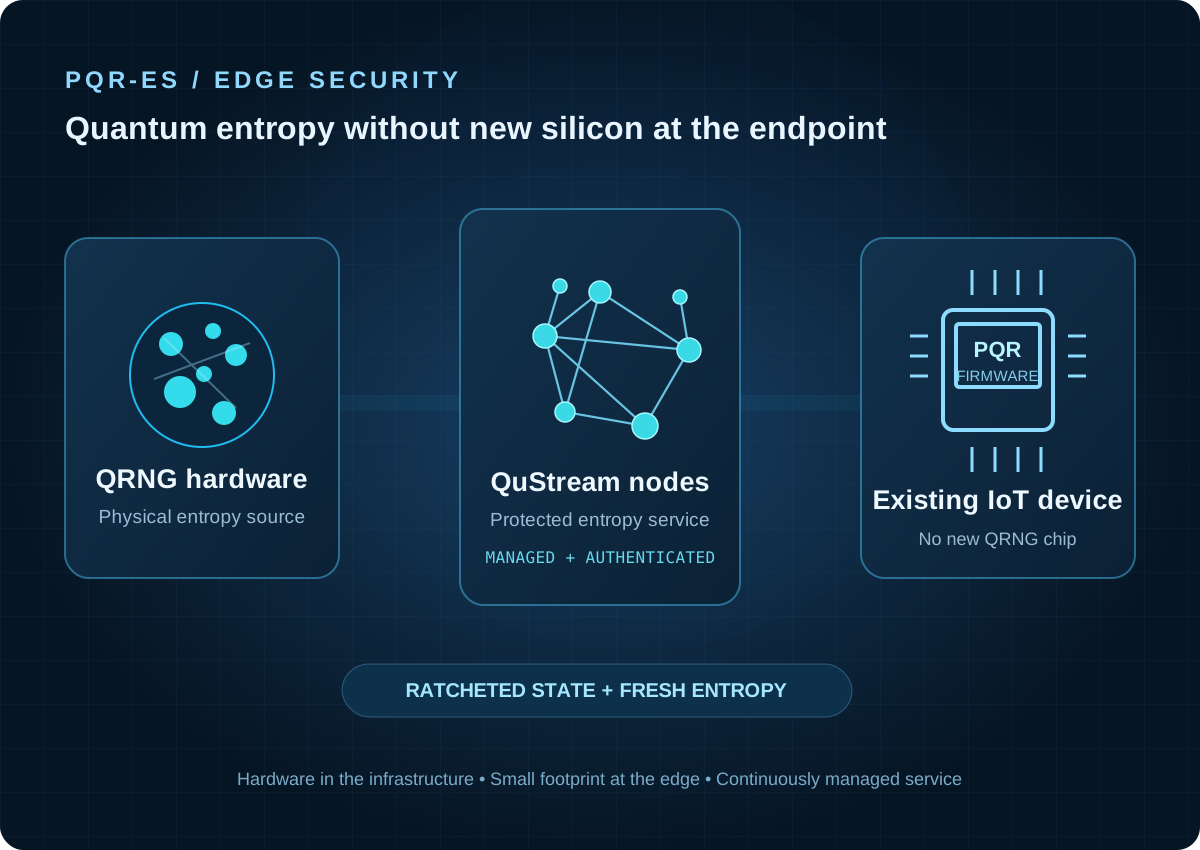
QuStream moves specialised quantum-randomness hardware into shared infrastructure while keeping the endpoint implementation lightweight. The network and PQR components are designed as one operational system—not three unrelated products.
LAYER 01 / HARDWARE
Physical QRNG sources
Specialised QRNG hardware produces physical entropy centrally or at managed nodes, rather than requiring an additional quantum component in every IoT device.
Entropy source ↓LAYER 02 / SERVICE
QuStream entropy network
Distributed nodes deliver fresh entropy contributions through authenticated, protected channels, with provisioning, rate controls and fleet-level service management.
Protected delivery ↓LAYER 03 / DEVICE
PQR firmware + QuStream software
A compact PQR implementation and tightly coupled proprietary software incorporate verified fresh contributions into evolving per-device cryptographic state.
State evolution →
Security boundary: Remote entropy is not automatically secret merely because it originates from a QRNG. Secure onboarding, per-device identity, authenticated and confidential delivery, state handling and key erasure determine the achieved protection. PQR-ES is designed to strengthen a correctly provisioned device; it cannot repair a completely untrusted bootstrap or make an unprotected public stream secret.
The commercial breakthrough
Upgrade the firmware. Keep the installed hardware.
For manufacturers, this changes the economics of IoT cryptographic modernization. PQR's small intended implementation footprint creates a potential path to add managed entropy and ratcheting to existing product ranges through a signed firmware update—without a recall, board redesign or QRNG chip on every device.
Suitable for low-memory, low-power deployments, subject to device compatibility.
A service relationship can support entropy refresh over the operational life of the product.
Manufacturers keep their hardware platform while modernising security software.
Designed for smart meters, industrial IoT, sensors and long-lived critical infrastructure.
How many installed devices would you otherwise have to replace to modernise their cryptographic trust?
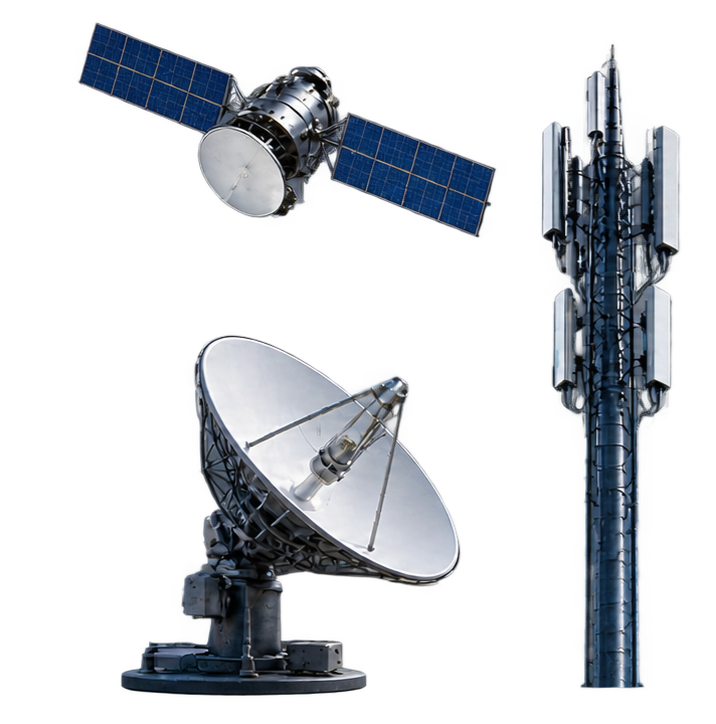
Protecting radio, fibre and satellite communications.
QuStream addresses cryptographic protection for device links, fibre networks, radio sites and satellite communications, including infrastructure expected to remain in service for many years.
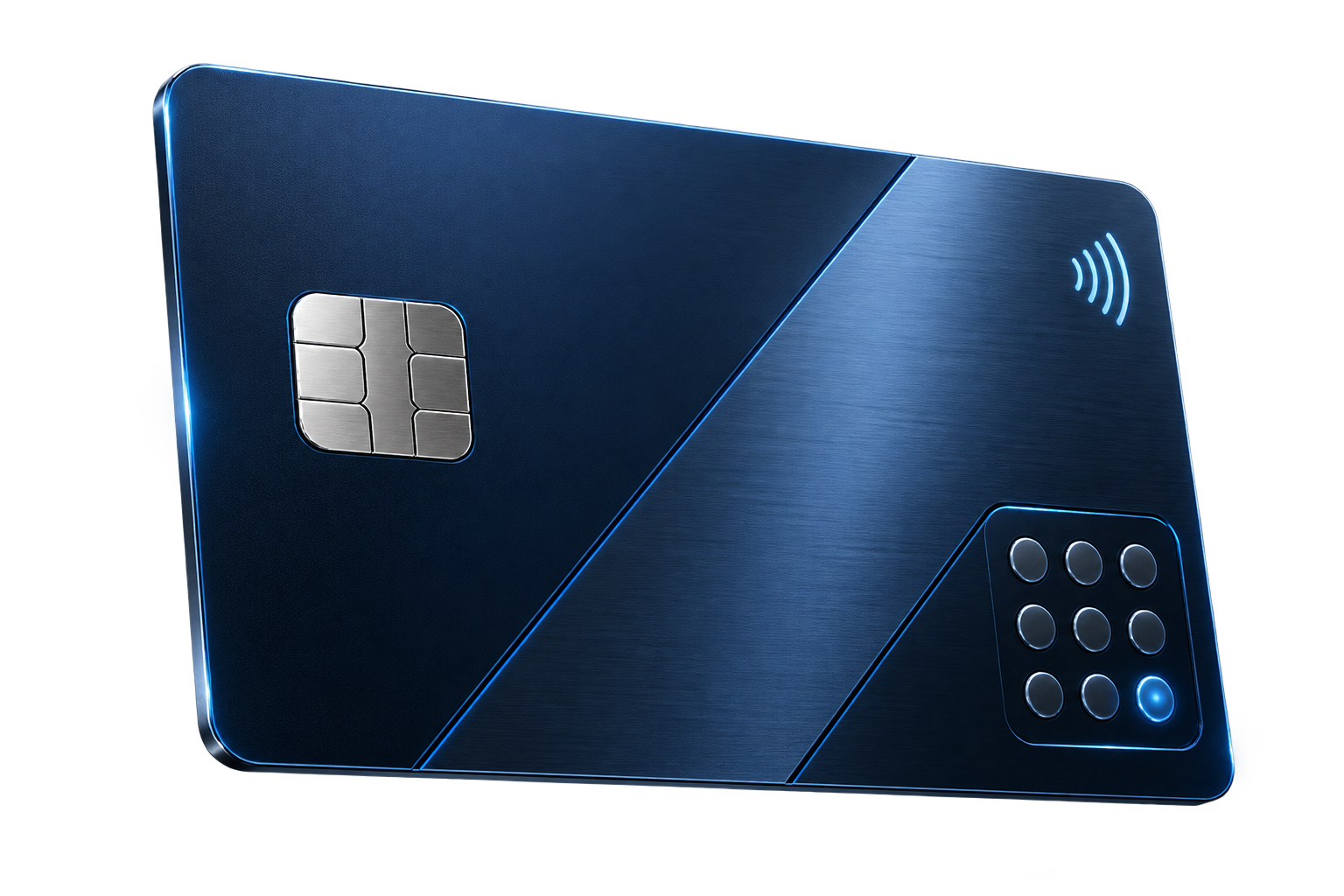
Central bank digital currencies
Cryptographic resilience for digital currency systems.
CBDC programmes use cryptography across issuance, distribution, wallets and settlement. QuStream's architecture is intended for systems that need to update keys and cryptographic algorithms during their operational life.
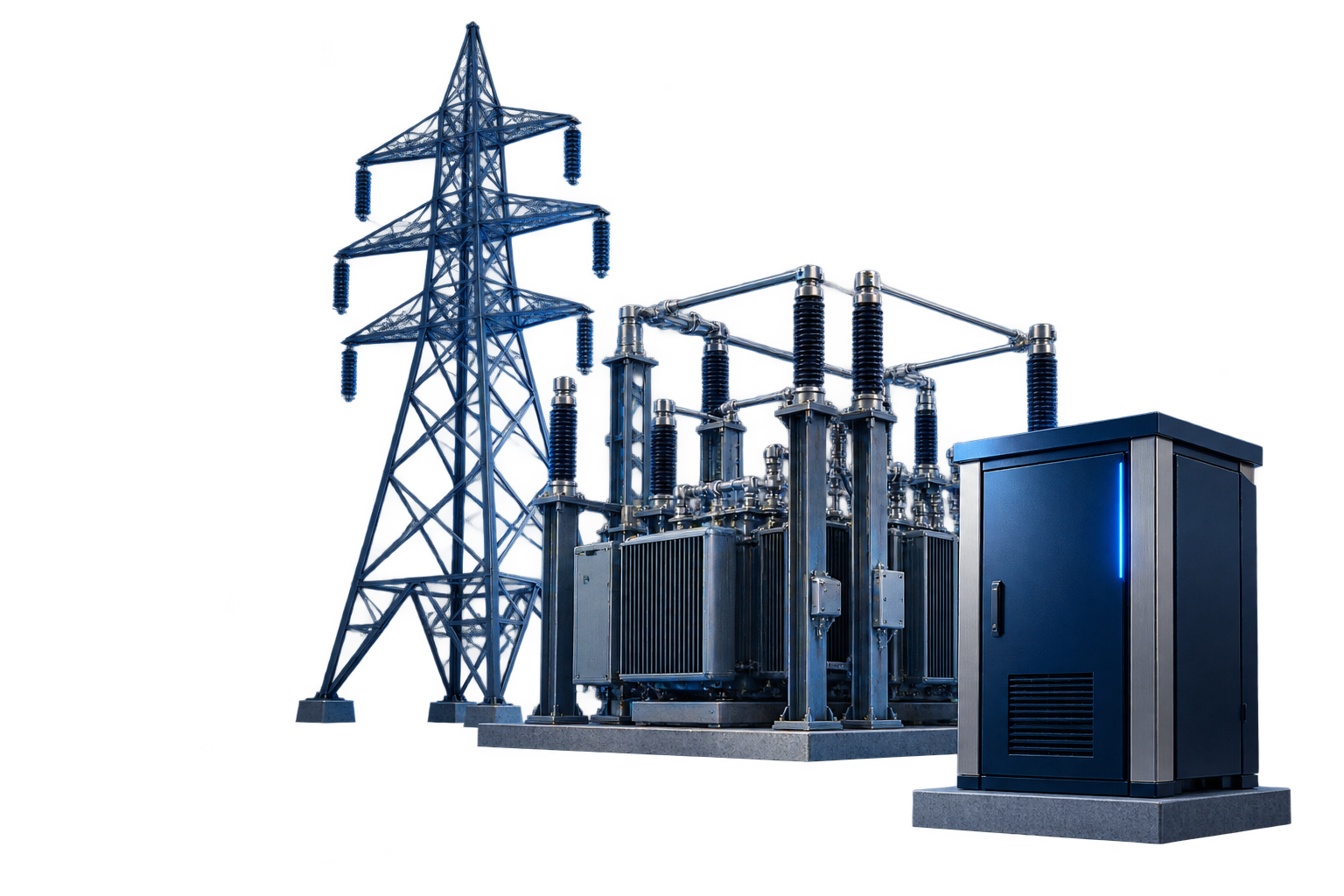
Energy grid
Security for electricity grid control networks.
Energy networks rely on long-lived operational technology and remote controls that cannot readily be taken offline. QuStream is designed to support cryptographic updates within those operating constraints.
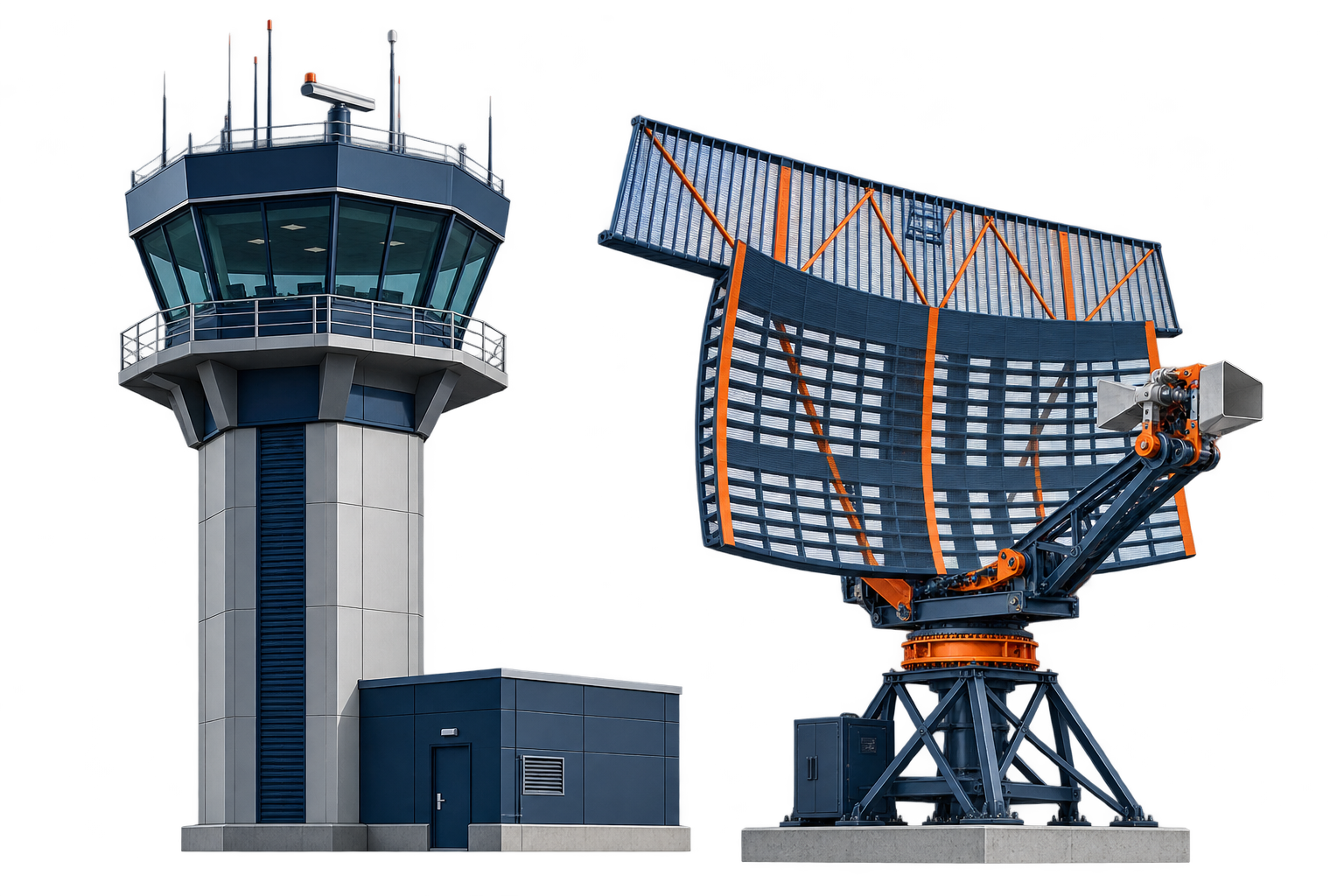
Aviation
Protection for aviation communications and control.
Aircraft, airports and air-traffic services depend on authenticated data and dependable communications over long equipment lifecycles. QuStream's technology is designed with those requirements in mind.
Civil nuclear
Long-term protection for civil nuclear infrastructure.
Civil nuclear operators require long-term assurance, tightly controlled information flows and continuity of service. QuStream is designed to support cryptographic updates within those demanding operational requirements.
Chemicals
Protecting control systems in chemical production.
Chemical plants depend on continuous processes and specialised control equipment. QuStream focuses on cryptographic protection that can be updated during the working life of those systems.
Hardware, firmware, software & entropy service
How PQR is implemented.
PQR runs in dedicated hardware or embedded firmware alongside required proprietary QuStream software. For PQR-ES, the stack also connects to QuStream’s QRNG-backed network entropy service for compatible IoT devices.
PQR hardware implementation
A dedicated FPGA implementation with tightly coupled QuStream software, intended for embedded communications equipment and integration into customer platforms.
↘
PQR algorithm
PQR is QuStream's core cryptographic algorithm. It evolves cryptographic state and seeks to limit the exposure from compromised keys within a defined threat model.
DQSP
DQSP remains a separate QuStream product. Any integration with PQR-C2 or PQR-DR would be specified for the relevant customer platform.
Firmware implementation
PQR can be implemented in firmware on compatible devices, with the required tightly coupled QuStream software.
PQR-ES entropy service
A QRNG-backed distributed node service supplies authenticated, protected entropy contributions to compatible low-power devices running PQR firmware and QuStream software.
↗
containment / resilience / adaptability
Secure by Design · Operational reality
Designing for compromise and recovery.
Captured equipment, disrupted links, exposed keys and changing standards all affect deployed security systems. QuStream considers these conditions in the design of PQR, its implementations and its operational protocols.
Containment by designLimit the messages and systems exposed when keys or cryptographic state are compromised.
Operationally adaptableCoordinated hardware, firmware and software support changes in cryptographic requirements.
Built for constrained systemsAccount for processing, power, bandwidth and transmission limits.
Containment and recovery depend on the implementation, secure erasure and access to uncompromised secret material. These properties require independent testing. Radio anti-jamming requires separate engineering measures.
Where it matters
Applications across critical systems.
Defence, space & unmanned platforms
Command, telemetry and communications in contested or high-noise environments.
↗
Critical national infrastructure
Long-lived equipment and sensitive operations that need an adaptable security path.
↗
Telecommunications
Secure networking and integration with externally supplied key material.
↗
Connected & industrial devices
PQR-ES combines a QRNG-backed network service with compact firmware and QuStream software for compatible installed IoT fleets.
↗
Progress to build on
03
Swiss and UK unmanned aircraft platforms are progressing through integration via QuStream’s relationship with Delatr.
Development and integration status is subject to customer validation and programme requirements.
Start a conversation
Explore opportunities with QuStream.
For PQR integration, technology licensing, industrial partnerships and strategic investment enquiries.